Phone
Add
2026-04-23
Source:BioPharma Dive
Share:
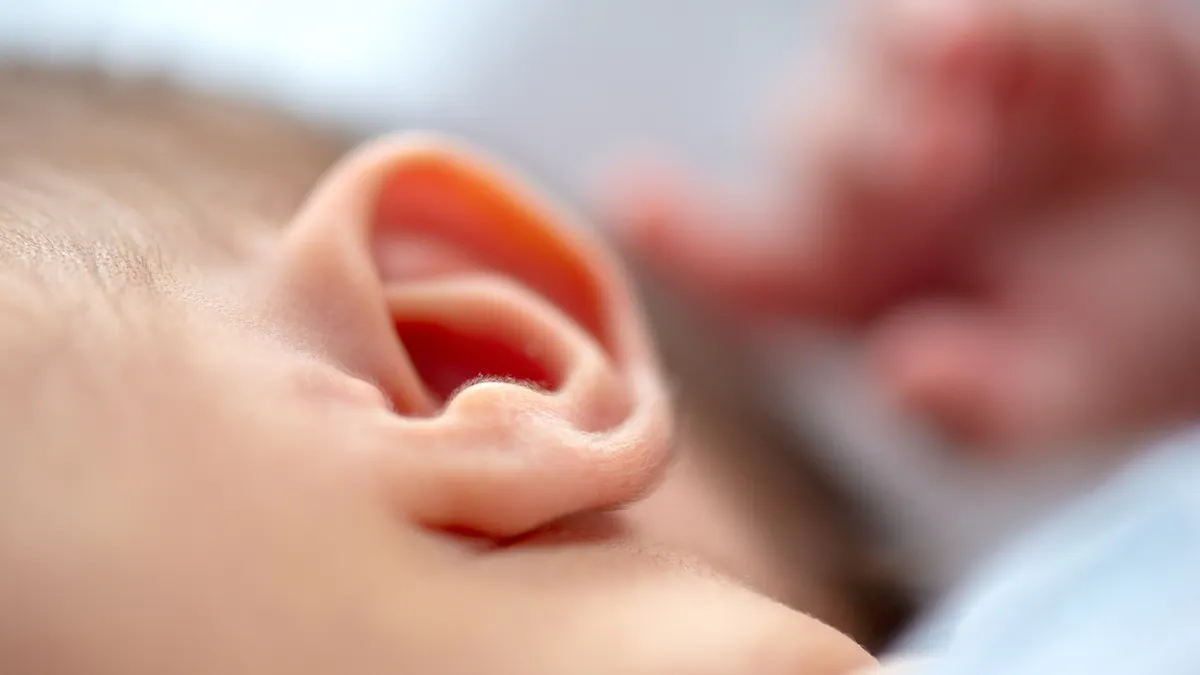
On April 23, 2026, the FDA approved Otarmeni, manufactured by Regeneron, for the treatment of hereditary hearing loss. Getty Images
For individuals suffering from a rare form of hereditary deafness, treatment options beyond hearing aids and cochlear implants are now available for the very first time.
This milestone was reached on Thursday, when the U.S. Food and Drug Administration (FDA) approved a one-time therapy designed to correct the genetic defect underlying this type of hearing loss and provide a lasting solution. Developed by Regeneron Pharmaceuticals, this gene therapy demonstrated immense potential in the pivotal clinical trials that supported its approval.
"I have witnessed firsthand my trial participants responding to their mothers' voices, dancing to music, and engaging with the world around them; now, it is possible for many more children with this specific type of hearing loss to experience these moments," stated Elliott Sherr, an investigator for the trial, in a statement released by Regeneron.
Currently, a therapy known as Otarmeni has been approved for the treatment of children and adults with severe to profound hearing loss caused by mutations in the *OTOF* gene. These genetic mutations prevent the hair cells within the inner ear from producing a protein essential for transmitting sound signals to the brain. The administration of Otarmeni—a procedure similar to cochlear implantation—involves using a modified virus to deliver a functional copy of the *OTOF* gene into the inner ear.
The pivotal study enrolled 20 children with *OTOF*-related hearing loss, ranging in age from 10 months to 16 years, who received an injection of Otarmeni in either one or both ears. Four of the participants had already received a cochlear implant prior to enrollment, while the remaining participants received cochlear implants as part of the study protocol. The primary objective of the study was to determine whether Otarmeni could restore hearing to a moderate or normal level.
Six months after treatment, 80% of the participants met this criterion. According to Regeneron, these individuals were able to detect sounds at a volume of at least 70 decibels—a level comparable to loud conversation or the noise generated by household appliances. Patient age appeared to have no bearing on treatment efficacy—a finding that likely prompted the FDA to extend the therapy's approved indications to include adults. “For this type of condition, is there really any difference between a 16-year-old patient and a 21-year-old one? We don’t think so,” said Jonathan Wheaton, Vice President of Genetic Medicines at Regeneron, in an interview. “The therapeutic window is so wide—that really came as a pleasant surprise to many of us in this field, myself included.”
During the trials, the parents of a 10-month-old girl noticed changes in their child within just a few weeks. Their daughter began responding to the sound of clapping and became more sensitive to spoken words and whispers. The parents of another infant girl reported that, one year after treatment, she had made “remarkable” progress; she is now able to respond to distant sounds and can even distinguish human voices in noisy environments.
Thus far, the Otarmeni procedure also appears to be generally safe; the most common adverse reactions include inner ear infections, vomiting, nausea, vertigo, and post-operative pain. Lawrence Lustig, another trial investigator, noted following the release of data late last year that most of these adverse reactions were mild, short-lived, and represent normal responses that could occur with any type of ear surgery.
Otarmeni delivers “rapid, meaningful, and durable” results, and its approval “marks the dawn of a new era in the treatment of hereditary hearing loss—one where natural, 24/7 hearing can now be restored,” added Shearer, an otolaryngologist at Boston Children’s Hospital.
As is the case with most cutting-edge therapies, Otarmeni still presents some unanswered questions. Scientists are not yet entirely certain how long its therapeutic effects will last, nor is it clear why the treatment appears to be more effective in some patients than in others. In a previous analysis of the data, at least one trial participant showed no significant improvement in hearing. Wheaton stated that, at the time, the most probable explanations remained unconfirmed. He noted that the leading hypothesis currently suggests a potential issue with the administration of the therapy, though “we don’t have definitive proof yet.”
Regeneron has announced that it will provide Otarmeni free of charge to “clinically eligible individuals” in the United States; however, this does not mean that patients will be exempt from covering various administrative and procedural costs out of pocket. In the past, insurance companies have carefully weighed the benefits and long-term durability of gene therapies, given that the price tags for such treatments often run into the hundreds of thousands—or even millions—of dollars.
Previous
none Service Hotline
