Phone
Add
2026-04-21
Source:BioPharma Dive
Share:
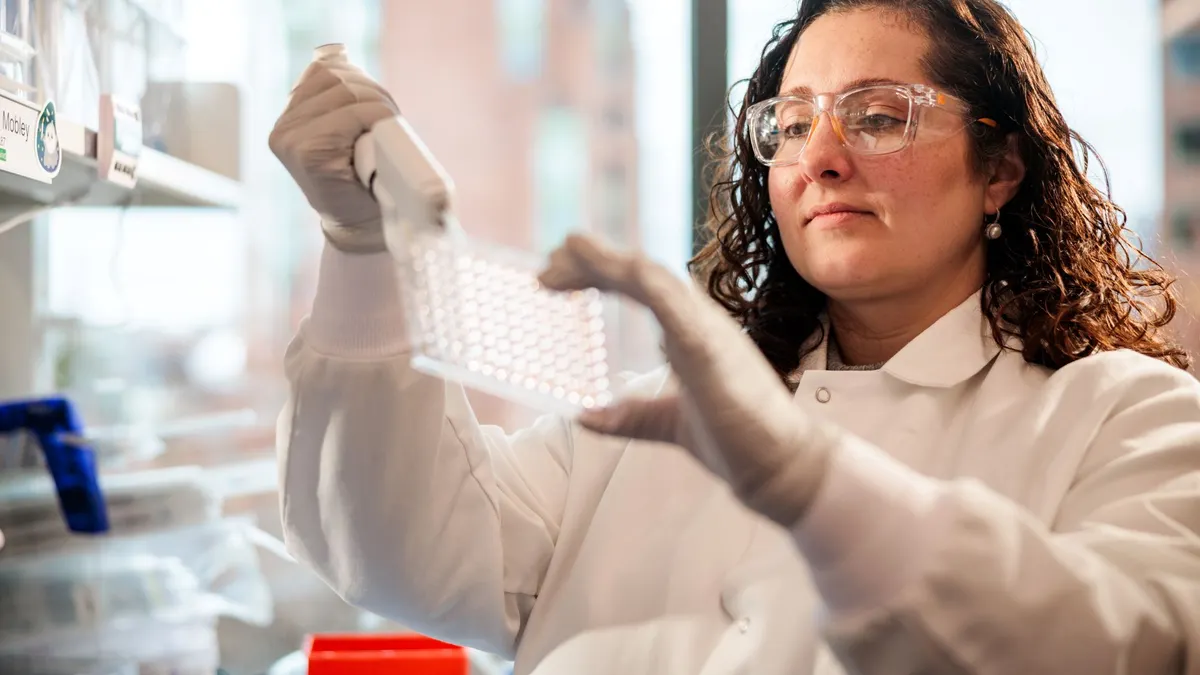
A scientist at Serif prepares samples for an experiment evaluating the company's "modified DNA" technology. Image courtesy of Serif Biosciences.
Flagship Pioneering has launched a new biotechnology company that believes it has found a solution to a long-standing problem hindering the advancement of genetic medicine.
The startup, named Serif Biomedicines, officially debuted on Tuesday with $50 million in funding and the capability to manufacture what it calls "modified DNA" medicines.
According to CEO and co-founder Jacob Rubens, Serif’s medicines are designed to combine the strengths of various genetic therapies—encompassing gene therapy, messenger RNA (mRNA), and small interfering RNA (siRNA) therapies championed by companies such as Moderna and Alnylam Pharmaceuticals. Its therapies consist of two components: precise regulatory instructions for therapeutic proteins, and mRNA sequences for "cofactors"—helper molecules that facilitate the drug's entry into the cell nucleus. These medicines are delivered to cells via a fatty outer shell known as a lipid nanoparticle—a delivery vehicle commonly used for complex therapeutics.
Serif claims that this approach circumvents many of the issues that currently limit the scope of gene therapy applications. The modifications Serif makes to DNA are designed to enable its therapies to express genes durably and safely without altering the cell's genome—a process that can otherwise lead to unintended health complications. The accompanying cofactors are intended to enhance therapeutic efficacy. Furthermore, by utilizing specialized lipid nanoparticles rather than the engineered viruses many companies rely on for gene delivery, Serif aims to enable its therapies to be administered multiple times and target a wide range of tissue types.
Serif states that these characteristics will facilitate the development of simpler, lower-cost therapeutic treatments. In a statement, the company noted that this approach also holds promise for treating a diverse array of diseases, offering "broad medical applications" and "immense market potential."
"Instead of manufacturing proteins *in vitro* and then injecting those proteins into our bodies, we can actually manufacture any drug *inside* our bodies by delivering the DNA sequence that encodes it," said Rubens.
Serif is set to present preclinical data at an upcoming medical conference. He noted that while the company has not yet disclosed its initial target diseases, it is currently focusing on the fields of rare genetic disorders and immunology.
In recent years, the fundraising landscape for developers of cell and gene therapies has become increasingly challenging, largely due to lingering uncertainties regarding R&D costs and market acceptance. However, Rubens stated that certain novel therapies are gaining traction, and the sector's difficulties have not deterred Flagship Pioneering—a prominent biotech investment firm renowned for backing major pharmaceutical platforms—from continuing to invest.
"When the foundational layers of biology become engineerable, new therapeutic categories are born that redefine the possibilities of medicine," said Noubar Afeyan, CEO of Flagship and co-founder of Serif, in a statement.
Serif is the first publicly launched company introduced by Flagship this year. In 2025, the Cambridge, Massachusetts-based firm launched AI-driven drug discovery startups such as Lila Sciences and Expedition Medicines; furthermore, several companies within its portfolio have established partnerships with major corporations like Pfizer and GSK.
When naming the startup, the Flagship team drew inspiration from the way font designers personalize typefaces. Rubens explained that the subtle strokes at the edges of letters or numbers influence a reader's perception of a word—much in the same way that modifications to synthetic DNA alter a cell's response to medication.
"It’s just like installing a new app on your phone: you’re adding new features, new software. The same applies when we deliver DNA into a cell," Rubens said.
 Service Hotline
